-
Free transport
-
24/7 security
-
Lowest price
-
Rent from one week
-
Free transport
-
24/7 security
-
Lowest price
-
Rent from one week
Autumn Garden Maintenance – Tips for Preparing Your Garden for Winter
13 August 2026
By
janice
Reading time: 4 minutes
Living tips
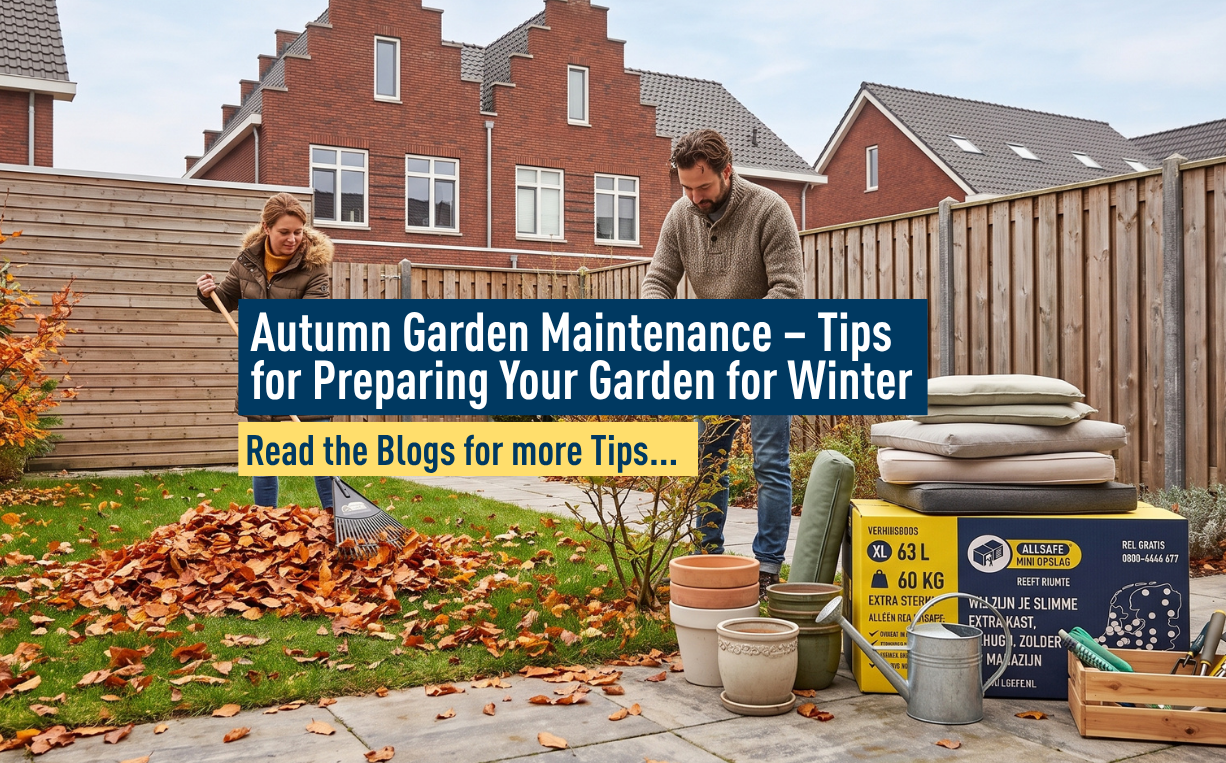
There is a bit more rain falling, you have pulled your warm coat out of the attic, and the days are getting longer and darker again: autumn has begun. Although there are naturally many lovely sides to the darker months, it also requires a bit of work: your garden needs to be prepared for winter! If you start around October, you will have plenty of time to protect your lawn, flowers, plants, and trees, while also avoiding overflowing wheelie bins. A garden prepared for winter creates a beautiful sight during autumn and winter and ensures a flying start in spring so you can get right on track for the coming summer. We will give you a few tips to optimize your garden maintenance!
Pruning and Dividing Plants in Your Garden
You can ‘divide’ plants in your garden. You do this by cutting the clumps in half. Handy if your plant is getting too large, or if you simply want two of them! It is best to do this in September or March.
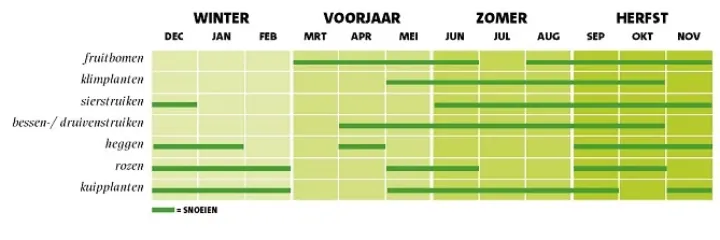
Pruning is also important to keep your plants healthy. But when should you prune your fruit tree? And what about your climbing plants, ornamental shrubs, and hedges? The ideal timing varies greatly per plant. The chart below shows the best time to prune each type of plant.
Pruning Calendar
There are three different ways to prune: trimming, topping, and sawing.
-
Trimming is mainly about thinning out or cutting back plants. Always cut just above a healthy branch, bud, or cluster of buds.
-
Topping forces the plant into bushier growth. To prevent your plant from turning into just a single stem, you snip off the main shoot, encouraging the plant to form side branches faster.
-
Sawing is required for thick branches. Start by sawing a notch from the underside to prevent the branch from tearing. This notch should be about 20 to 30 centimeters from the trunk. Next, saw all the way through from the top, about 5 to 10 centimeters further out from the notch. Finally, saw off the remaining stump as close to the trunk as possible.
Lawn Maintenance
It is easy to prepare your lawn for winter by continuing to mow until it stops growing. Use a maximum mowing height of about 4 centimeters. Make sure to remove leaves and other debris blown onto your lawn as quickly as possible, your grass needs to be able to breathe!
For extra oxygen, you can scatter lime (pellets). This helps the roots breathe better and prevents the growth of moss. If moss is already present in your grass, the lime will cause it to die off. A quick rake in the spring, and your lawn will look wonderful again. In the rest of your garden borders, you can leave fallen leaves where they are; they serve as a great layer of protection for plant roots!
Protecting Frost-Sensitive and Hardy Plants
Hardy plants generally do not need any protection against frost. You also do not need to do much for frost-sensitive plants as long as freezing temperatures have not set in yet. However, once it starts to freeze, you will need to take action.
As a general rule, shelter keeps plants safer than exposure to cold winds. An easy way to protect your plants from frost is by wrapping them in bubble wrap, for example. A typical Dutch winter usually will not cause significant harm, but during severe frost, it is best to move sensitive plants indoors, such as into a garage or shed.
Excess water poses a much greater risk than cold temperatures. Therefore, ensure that overwintering plants are placed where water can drain easily.
Preparing the Outdoor Tap for Winter
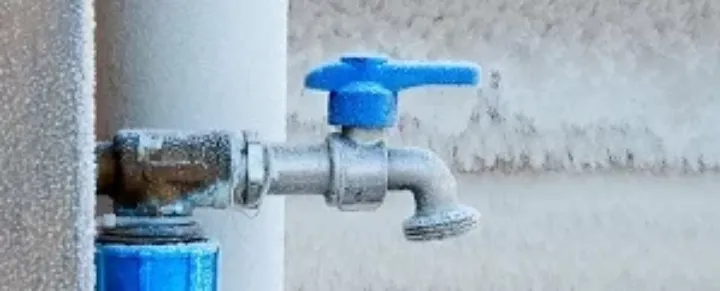
Convenient, isn’t it? An outdoor tap makes it easy to fill a watering can or hook up a garden hose. In winter, however, you must shut off the water supply to prevent damage to your pipes. Be sure to drain the tap using a frost valve so no water remains inside.
Make sure your watering cans, pots, and containers are empty as well. Water expands when it freezes, which can damage your belongings.
Preparing Your Garden for Winter: Storing Furniture and Gear
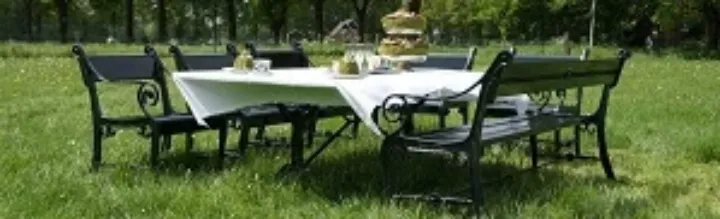
During the winter, your lounge chairs, outdoor dining table, and other patio furniture will not be in use. Leaving them outside exposes them to frost and weather damage. The best option is to store them indoors for the winter.
However, this can take up a lot of (unnecessary) space in your own shed—especially alongside bikes, tools, and stored food. ALLSAFE Mini Storage can serve as your external shed to keep your furniture safe through the winter months. When spring arrives, you can simply pick your items up again! This keeps your furniture in top condition while leaving you plenty of room to live comfortably.
Your Garden Is Winter-Ready!
With pruned trees, protected plants, a neatly mown lawn, and a drained outdoor tap, your garden is fully prepared for cold winter days. Come spring, everything will bloom beautifully again, and your garden will look great all winter long. So put on your warm coat and mittens, and take a few nice photos!
Looking for more winter gardening tips?Read more in our blog: Heading into winter with atmosphere: the best garden ideas!