-

Free transport
-

24/7 security
-

Lowest price
-

Rent from one week
-
Free transport
-
24/7 security
-
Lowest price
-
Rent from one week
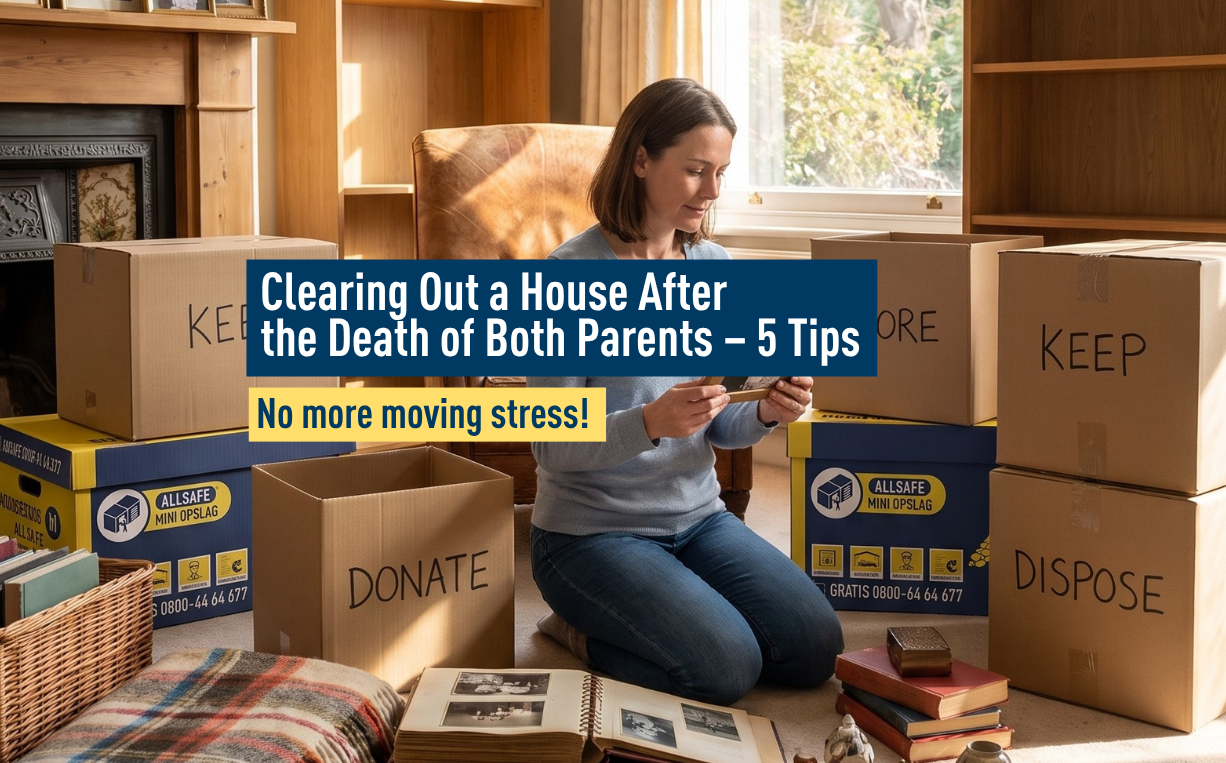
Clearing Out a House After the Death of Both Parents – 5 Tips
 Living tips
A death brings a great deal of grief. After the death of a parent, uncle, aunt, brother or sister, many practical matters need to be arranged, including what to do with the contents of their home. While planning the funeral or cremation, dealing with the belongings is probably the last thing on your mind. Saying goodbye properly should be the first priority.
Below, we have listed several options for dealing with the contents of the property, so this is one less thing for you to worry about.
1. Sort Through the Belongings at a Later Date
The first days and weeks after a death are often taken up by arranging the funeral and informing the relevant organisations and authorities. Sorting through the belongings is something that can usually be done at a later date.
If the property has not yet been sold, this may not be an immediate problem. However, if it is a rented property, there will normally be a deadline by which the home must be completely cleared. This deadline can approach quickly, even though you and your family may not yet have decided what to do with all the belongings.
For this reason, many relatives choose to rent temporary household storage at ALLSAFE Mini Storage. Renting a storage unit gives you peace of mind and allows you to decide what to do with sentimental belongings at a later time.
At a nearby ALLSAFE location, you can rent a storage unit for as little as one week, allowing you to store the deceased person’s belongings temporarily. The items are kept safe in a heated and temperature-controlled environment, helping them remain in their current condition.
If you do not have the means to transport the belongings yourself, ALLSAFE can also provide moving assistance.
2. Accept the Inheritance Under Benefit of Inventory
By accepting an inheritance under benefit of inventory, you agree to accept the inheritance only if a positive balance remains. This means that the deceased person’s assets must be worth more than their outstanding debts.
If this applies to your situation, it is important not to remove inherited items from the property, such as silverware or antiques. Doing so could potentially be interpreted as fully accepting both the inheritance and any associated debts.
3. Divide Valuable and Sentimental Belongings
There will probably be belongings in the property that you or other family members would like to keep. These may be items with significant emotional or financial value.
If the will does not contain specific instructions regarding these belongings, they can usually be divided among the family members.
4. Find a New Home for the Remaining Belongings
Once everyone has selected the belongings they would like to keep, there may still be items left that are in good condition. There are several things you can do with these items without having to organise everything yourself:
- Take valuable items to an auction house
- Arrange for a charity shop to collect the items
- Sell the complete contents to a household clearance company
Many companies can help you with this process, such as Seniorenhulp.com.
5. Return the Property to Its Original Condition and Remove Waste
Once all the belongings have found a new home, the final task is to return the property to its original condition.
This may include removing flooring, lamps and curtains, carrying out cleaning work and disposing of any remaining waste. These tasks can also be outsourced, giving you peace of mind that everything will be handled properly and thoroughly.
We hope these tips help reduce some of the practical work and stress involved after the death of a loved one.
Related articles

Create a Cozy Winter Garden with These Inspiring Ideas
Garden ideas to keep you warm Brrr, perhaps the most important thing if you want to use ...
Autumn Garden Maintenance – Tips for Preparing Your Garden for Winter
Preparing the Outdoor Tap for Winter Convenient, isn’t it? An outdoor tap ma...

Building Your Own House: How Much Does It Cost and What Should You Consider?
The details behind the details Unlike buying an existing property, b...