
-

Free transport
-

24/7 security
-

Lowest price
-

Rent from one week
-
Free transport
-
24/7 security
-
Lowest price
-
Rent from one week
What should you consider when bringing a kitten into your home?
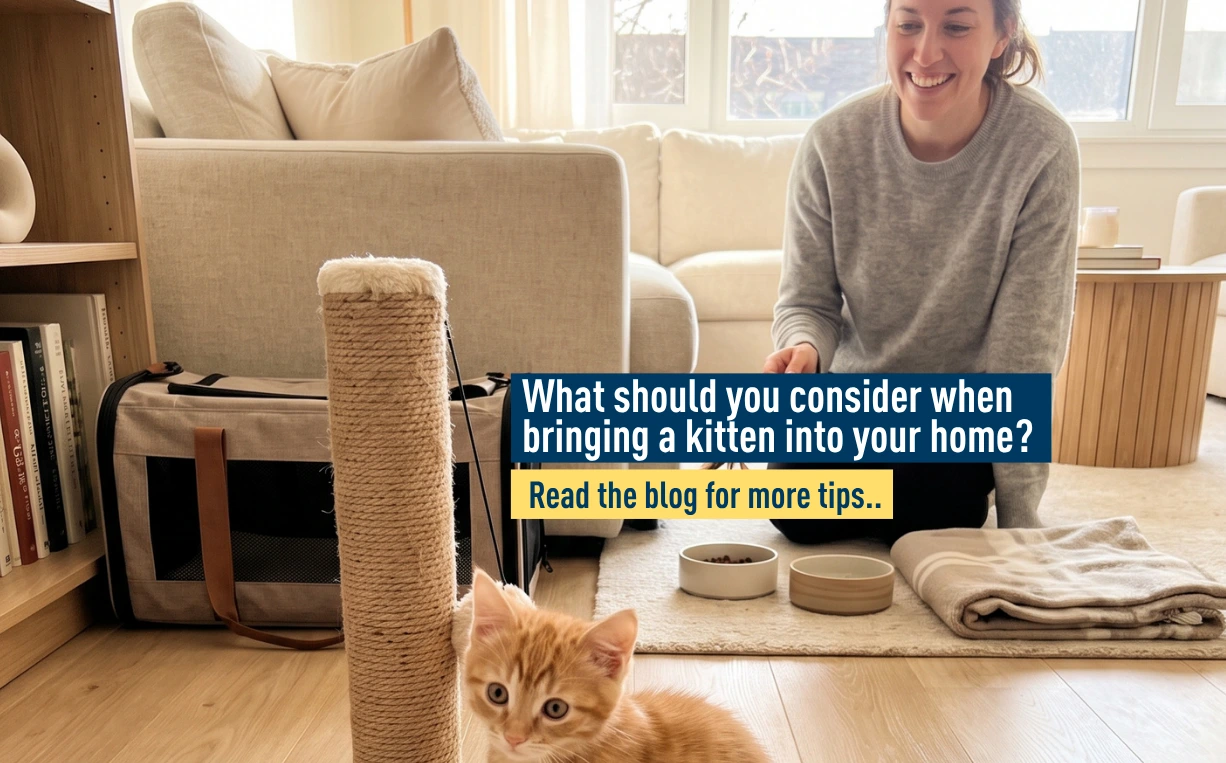
Bringing Your Kitten Home: What Next?
During the first few days, it is very important to choose the right room for your kitten to get used to its new home. Choose a room where your kitten will not be disturbed by other pets, children or obstacles during the first week. Do not let your kitten explore the entire house immediately.
You could temporarily clear out a home office or another quiet room so your kitten can slowly become familiar with the smells and sounds of the house. Put the belongings in moving boxes and move them to another room or store them outside the home temporarily. Make sure there is enough space for all the essentials, such as bowls for water and food and a litter tray. Keep the litter tray as far away from the food and water as possible.
An important thing to remember at the beginning is that your kitten may not yet be house-trained and may not know which objects it is allowed to scratch. Protecting your furniture is therefore essential. You have two options: cover your belongings with protective material such as bubble wrap, or temporarily store them somewhere else, for example at ALLSAFE Mini Storage.
You can rent a storage unit for as little as one week, making it ideal for the first few days. This also gives you more space at home while protecting your belongings from your kitten’s mischievous behaviour.
Give Your Kitten Time to Settle In
Once your kitten has become more familiar with the smells and sounds in your home, it is time to create a permanent place for your new housemate.
Where should you place the litter tray? No matter how often you clean it, a litter tray can still cause unpleasant smells. Place it somewhere your kitten can easily find it. This is especially important while litter training.
Good places include the hallway, under the stairs, in the attic or in a quiet corner where you do not spend much time. You could also clear out the storage room and create a peaceful space for your kitten there. Cats, just like people, need some privacy.
Make sure your kitten cannot reach an open bag of cat litter. Cats sometimes use the open bag as a litter tray, which is not very convenient.
Where Should You Put the Food Bowls?
You can place your kitten’s food and water bowls almost anywhere, as long as they are not close to the litter tray. To prevent food from ending up all over the living-room floor, create a dedicated feeding area for your kitten. Placing a mat underneath the bowls is already a simple and practical solution.
A Cat Bed for Your Kitten
You will probably want to keep your kitten close by, so place a comfortable and stylish cat bed in the living room. You could choose a decorative rococo-style cat sofa or a trendy hammock.
To make efficient use of your space, you could also choose a cat bed that doubles as a side table. Carmani offers several attractive options.
Scratching Post
A scratching post and its position are very important when training your kitten. Place it somewhere clearly visible and along a route your kitten frequently walks, so your kitten can use it to sharpen its claws.
For something more elaborate, you could buy a complete climbing and scratching playground, although these take up considerably more space.
You will need to make permanent room for all these items, as cats live for an average of around 14 years. Take a good look around your home and decide which belongings you can throw away, move elsewhere or store in a storage unit when space at home is limited.
Another advantage is that belongings stored safely outside the home will remain protected from your cat’s claws.
Do you have any additional tips for creating a dedicated space for a new kitten? Share them with us!
Related articles
Here’s How to Sell Your Home Quickly and for a Profit!
NVM Open House Day NVM Open House Days are a great way to attract a large number of viewers to y...

Create a Cozy Winter Garden with These Inspiring Ideas
Garden ideas to keep you warm Brrr, perhaps the most important thing if you want to use ...
Autumn Garden Maintenance – Tips for Preparing Your Garden for Winter
Preparing the Outdoor Tap for Winter Convenient, isn’t it? An outdoor tap ma...