
-

Free transport
-

24/7 security
-

Lowest price
-

Rent from one week
-
Free transport
-
24/7 security
-
Lowest price
-
Rent from one week
How do you make sure your garden items survive the winter?
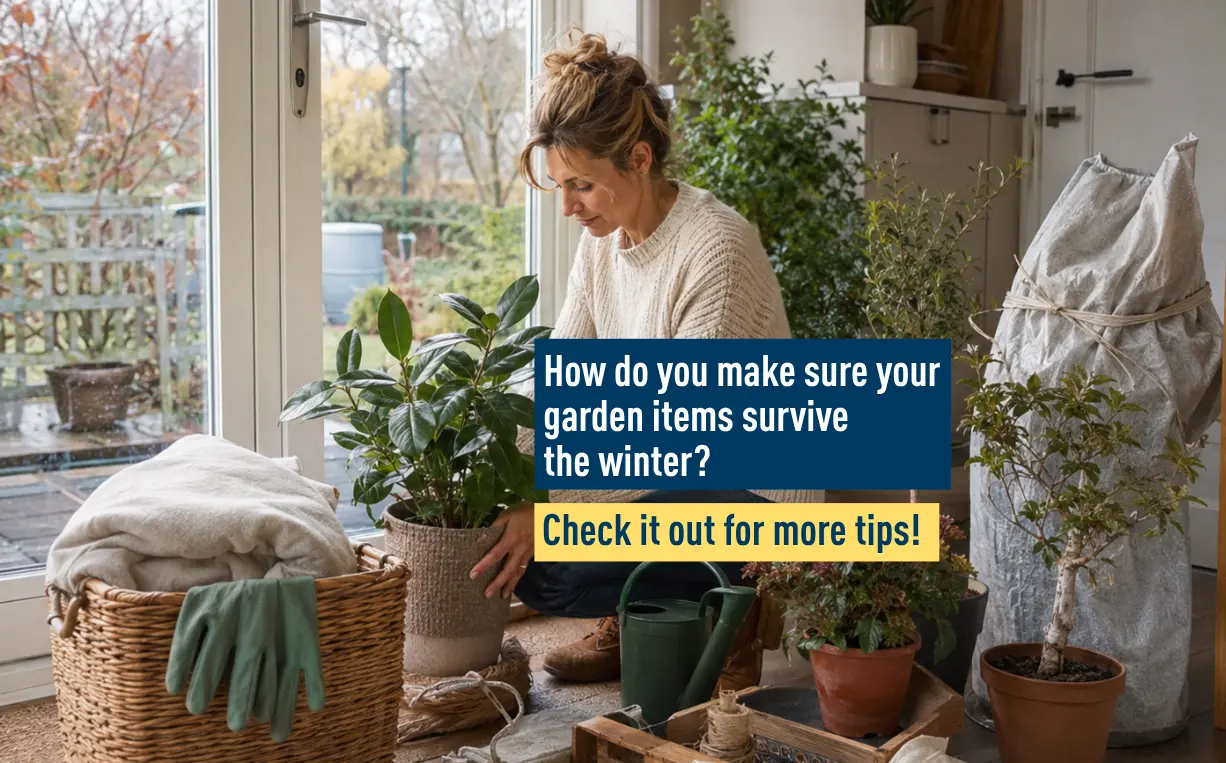
Are you also disappointed that summer is almost over? In October and November, there may even be a chance of frost or overnight frost again. That is why now is the right time to start preparing your garden and balcony for winter. The checklist below will help prevent your garden items from being damaged by moisture and cold, which flowerpots and garden furniture are particularly sensitive to.
1. Bring plants indoors
Plants are not the only things that may struggle to survive the winter. Flowerpots are often unable to withstand severe frost as well. Therefore, move your plants indoors, into your home, shed or garage.
When you do not have enough space to bring the pots inside, cover both the plant and the pot with an insulating plant cover, available at most garden centres. Turn empty pots upside down to prevent them from cracking due to frost.
2. Outdoor tap and garden hose
Shut off the outdoor tap to prevent the pipes from freezing and bursting, as frozen water expands. The same applies to your garden hose. Drain it completely and store it indoors so that cold temperatures and frost cannot cause any damage.
3. Store your barbecue in a dry place
Most barbecues with properly closing lids can remain outside during winter. However, temperature changes, rainfall and the resulting condensation mean that your barbecue will probably need a thorough clean after winter.
You can therefore also choose to store your barbecue indoors. When your barbecue does not have a lid, it is advisable to place it in a shed or storage unit to prevent rust caused by moisture and exposure to the elements.
4. Garden furniture
Wooden garden furniture can suffer considerably from frost and rainfall. It may become discoloured or even start to rot. That is why wooden garden furniture should be stored indoors during winter, preferably in a dry shed or storage unit.
Before storing the furniture, clean it with water and a soft brush. Once the furniture is completely dry, it is best to treat it with furniture oil. Never cover wooden garden furniture with plastic, as moisture can easily become trapped underneath it.
Other garden items, such as parasols, can be covered with a waterproof plastic cover. Plastic garden furniture can usually remain outside during winter.
5. Garden tools and lawn mower
Before winter, clean your lawn mower with a brush or wooden spatula until all soil, sand and grass have been removed. It may take some effort, but it will help prevent your lawn mower from rusting over time.
The same applies to garden tools such as spades, hoes and pruning shears. To extend their lifespan, it is best to store metal tools indoors in a dry and frost-free place during winter. This will keep your garden items in excellent condition throughout the colder months.
Ik kan de tekst ook iets natuurlijker en commerciëler maken voor een Engelse ALLSAFE-blog.
Related articles

Here’s How to Sell Your Home Quickly and for a Profit!
NVM Open House Day NVM Open House Days are a great way to attract a large number of viewers to y...

Create a Cozy Winter Garden with These Inspiring Ideas
Garden ideas to keep you warm Brrr, perhaps the most important thing if you want to use ...
Autumn Garden Maintenance – Tips for Preparing Your Garden for Winter
Preparing the Outdoor Tap for Winter Convenient, isn’t it? An outdoor tap ma...