
-

Free transport
-

24/7 security
-

Lowest price
-

Rent from one week
-
Free transport
-
24/7 security
-
Lowest price
-
Rent from one week
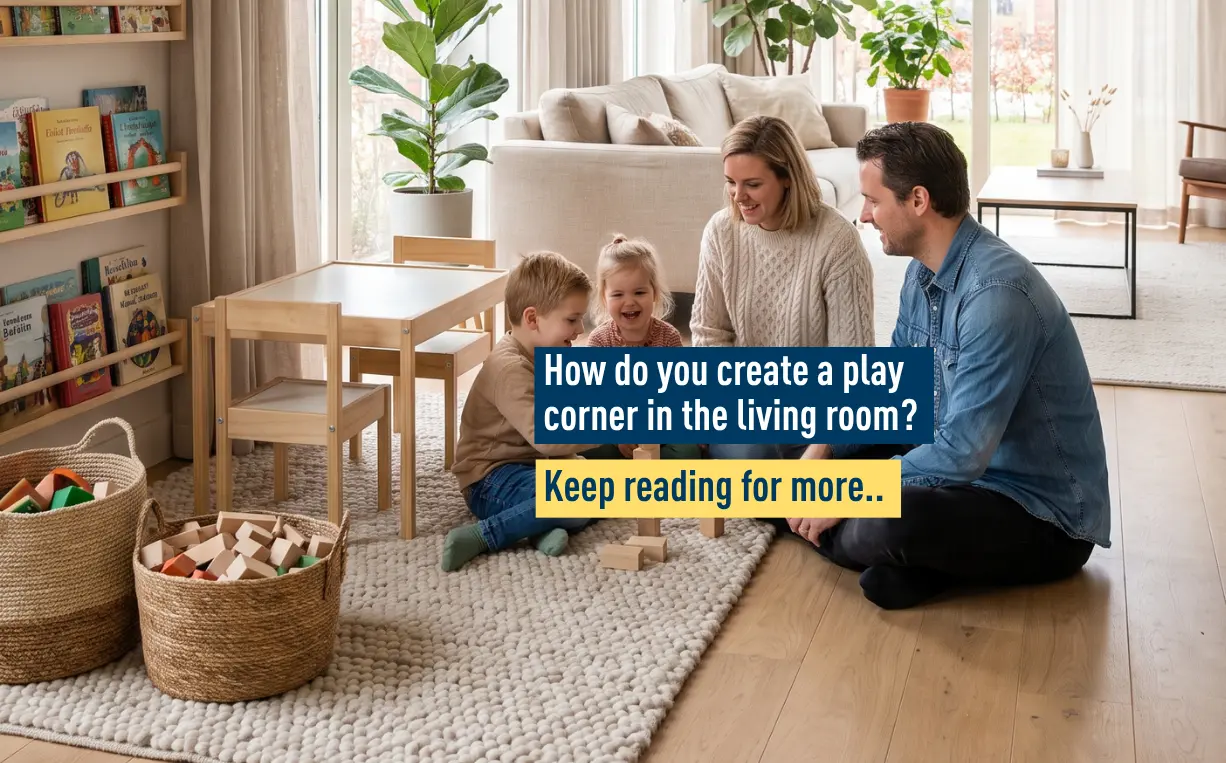
How do you create a play corner in the living room?
 Moving tips
Toddlers and preschoolers love having their own little space at home where they can play. A play area is also very practical: all the toys stay in one place, and your child learns to tidy up after playing. But how do you create a fun play area, and where do you store items that do not currently have a designated place? In this blog, we explain how to create one in five simple steps.
Step 1: Find a suitable spot and create space
Choose a spot that is slightly out of sight and does not take up too much space. For example, you can easily create a cosy play area under the stairs or behind a kitchen breakfast bar. If you do not have enough room there, consider emptying a cupboard and moving it to another area outside the living room.
Make sure you have at least three square metres available for the children’s play area, so there is enough room to store all their belongings. As your child gets older and outgrows certain items, you can store surplus toys somewhere else.
Step 2: Create areas for playing, crafting and reading
Children need two types of spaces in their play area. On the one hand, they need a quiet place where they can complete puzzles or look through a book. On the other hand, they also need space for activities such as playing with modelling clay, making music or using their imagination to recreate everyday situations with a small play kitchen, tent or pretend shop.
When designing the play area, make sure to include at least a small table and a few chairs.
Step 3: Make the play area cosy
You can make the play area extra cosy with a fun and colourful wall sticker. You could also hang up a noticeboard to display your child’s artwork or add a chalkboard that they can draw on whenever they like.
Step 4: Add toy storage furniture
Last but not least, provide practical storage furniture to help keep the living room tidy. For example, choose a crate on wheels or a large toy chest. We found several good examples of toy storage furniture on Pinterest.
You can make your own crate on wheels by attaching castors from a DIY store to a wooden crate, such as an old apple crate. There are also plenty of attractive and practical toy storage solutions available from retailers such as IKEA and Blokker or DIY stores such as KARWEI. Storage boxes will also be available from ALLSAFE soon.
Step 5: Add the toys
The only thing missing now is the toys! There are many types of children’s toys that allow children to learn through play. Our tip is to choose wooden toys. They last a long time, are highly durable and also look beautiful in your new children’s play area.
Related articles
Here’s How to Sell Your Home Quickly and for a Profit!
NVM Open House Day NVM Open House Days are a great way to attract a large number of viewers to y...
Laying your own floor - this is how you do it!
Tips for laying your floor There are a few things you should take into a...

New Build or Existing Home – What to Consider When Buying a House
Temporary Storage for Your Belongings With both new builds and existing homes, you ...