
-

Free transport
-

24/7 security
-

Lowest price
-

Rent from one week
-
Free transport
-
24/7 security
-
Lowest price
-
Rent from one week
How to Create and Maintain Closet Space
 Moving tips
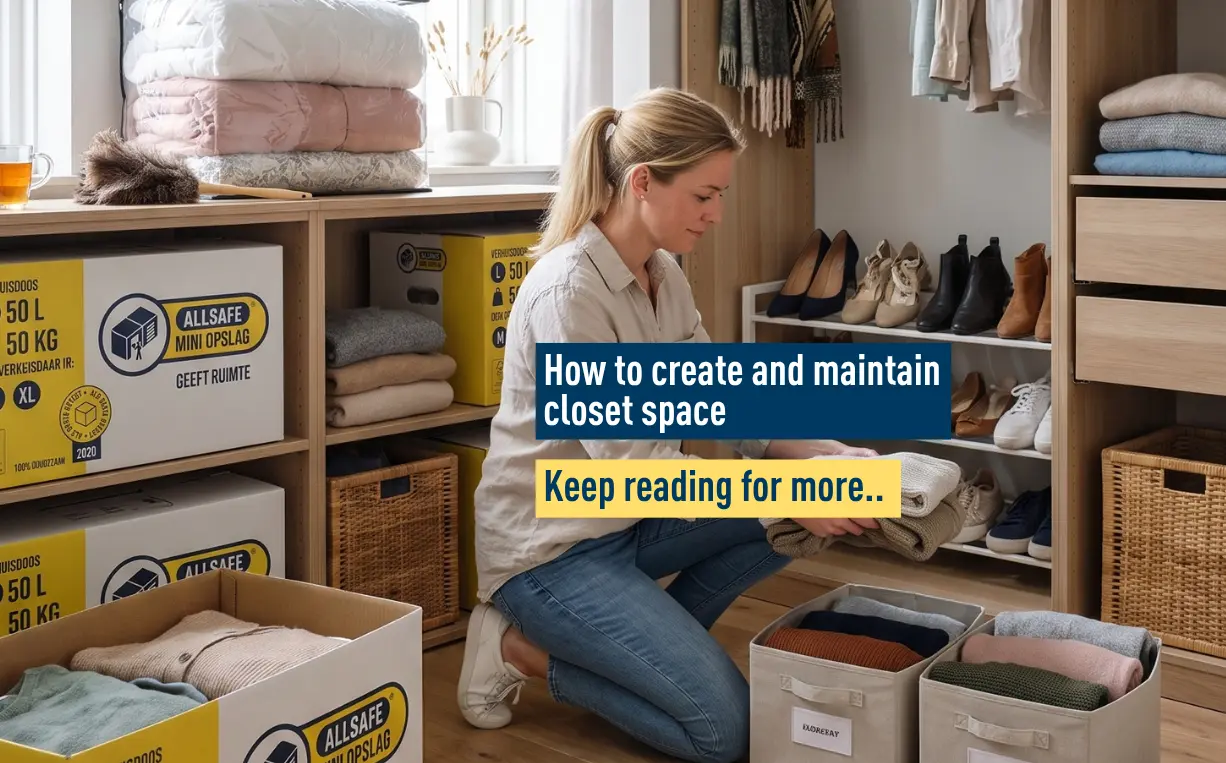
Only 20% of the items in your wardrobe are used regularly, which means that 80% remain unused. The large number of items in our wardrobes often means we have to search for the things we need. Finding the right outfit alone takes women an average of 287 days over the course of their lives! It is therefore time to bring some structure to our wardrobes. Below, we show you how to organize your wardrobe efficiently in four simple steps, helping you create and maintain more closet space.
Step 1: Empty and clean your wardrobe
Remove everything from your wardrobe and clean it with warm water and soap. A fresh start gives you a clear overview of the available closet space.
Step 2: Sort and create piles
As your wardrobe becomes increasingly full, it can be difficult to decide which clothes you want to keep and which items can go. Because everything is crowded and disorganized, we often postpone making these decisions. In the end, we keep everything, even though there are probably quite a few items you could get rid of after taking a closer look. They may be worn out, never worn or no longer the right size.
How do you decide which clothes to keep and which ones to remove? It is simple: ask yourself how often you wear each item. Sort your clothes into three piles:
Pile 1: Often
Pile 2: Occasionally, approximately once every three months
Pile 3: Never
The clothes in the “Never” pile can be donated, sold or taken to a charity shop. You can also place them in a clothing collection bin, which can usually be found near larger supermarkets or recycling points with glass and paper containers.
Step 3: Create a wardrobe layout
Decide where everything will go in your wardrobe and stick to this layout when organizing it. Make sure the system you create will remain practical over time. Avoid creating very high piles and do not overcrowd the hanging section.
Place seasonal clothing and the items you wear most frequently at the front of your wardrobe. Socks and underwear can be stored in baskets, while delicate, valuable or easily creased clothing can be hung on clothes hangers and organized by colour. After washing your clothes, always fold or hang them back in the same place.
Step 4: Maintain your closet space
This final step is important. You have just created more closet space and a better overview, but how do you maintain it? People collect a lot of clothing over the years, so it is important to keep everything organized and know exactly what you have in your wardrobe, even several years after this organizing session.
Set aside a “wardrobe organization day” every season. Repeat step 2 and move the clothing for the new season to the front.
Do you still have a lack of space after sorting everything? Consider storing some of your clothing outside your home to keep your wardrobe more spacious and organized.
Make sure the other members of your household also follow the wardrobe system. In the long term, this will save everyone a lot of time sorting and searching for items.
Related articles

Here’s How to Sell Your Home Quickly and for a Profit!
NVM Open House Day NVM Open House Days are a great way to attract a large number of viewers to y...

Laying your own floor - this is how you do it!
Tips for laying your floor There are a few things you should take into a...

New Build or Existing Home – What to Consider When Buying a House
Temporary Storage for Your Belongings With both new builds and existing homes, you ...